I’ll just say what everyone’s thinking: getting BIAB done at a salon every three to four weeks adds up. Fast.
A single BIAB overlay appointment in Australia runs somewhere between $55 and $90, depending on where you live and whether you add colour on top. That’s anywhere from $700 to over $1,100 a year if you’re keeping up with regular infills. For something that’s essentially a protective coating on your natural nails, that’s a serious chunk of money.
No wonder so many Australians are looking to do BIAB at home.
And here’s the thing — it’s genuinely doable. BIAB isn’t like acrylics where you need years of training and a steady hand that could perform surgery. The bottle-and-brush format was specifically designed to be more accessible than traditional builder gels. If you can paint your nails with gel polish, you can learn to do a BIAB overlay. It takes a bit of practice to get the apex right and to avoid flooding the cuticles, but most people get noticeably better after just two or three attempts.
The real question isn’t “can I do BIAB at home?” — it’s “which products should I buy that won’t cost a fortune but also won’t wreck my nails?”
Let’s figure that out.
The Real Cost of BIAB at Home vs the Salon
Before we get into specific products, let’s do some quick maths. Because “affordable” means different things to different people, and it helps to know what you’re actually comparing.
Salon cost: $65 per appointment (let’s use a middle figure), every three to four weeks. That’s roughly $850 to $1,130 per year.
Home setup cost: Somewhere between $120 and $250 upfront for a full kit — BIAB gel, lamp, prep tools, top coat, and removal supplies. After that, you’re looking at maybe $30 to $50 every couple of months for replacement gel and consumables.
Annual home cost after the initial setup: Roughly $150 to $250 per year.
So even on the conservative end, doing BIAB at home saves you $500 to $800 a year. That’s a weekend away. That’s a really nice pair of shoes. That’s a lot of takeaway coffee. The maths is hard to argue with.
The catch — and there’s always a catch — is that your first couple of home BIAB applications probably won’t look as polished as what you’d get from a trained tech. That’s normal and that’s okay. The savings are so significant that even if you need to redo a nail or two while you’re learning, you’re still well ahead financially.
What “Affordable” Actually Means (and What It Doesn’t)
Here’s where I want to be genuinely honest, because the word “affordable” gets thrown around in ways that can steer you wrong.
Affordable doesn’t mean cheapest. The cheapest BIAB products available in Australia right now are unbranded bottles from Temu, Shein, and AliExpress — some as low as $5 to $8. I’m not going to pretend those products don’t exist. I’m also not going to recommend them.
The issue isn’t that every cheap product is automatically terrible. Some might be perfectly fine. The issue is that you have no idea what’s in them. Ingredient lists are often incomplete, vague, or absent entirely. Some contain HEMA at levels that can trigger allergic reactions — and once you develop a gel allergy from HEMA sensitisation, it’s often permanent. That means you can’t use any gel products anymore. At a salon or at home. Forever.
For a $6 saving on a bottle of builder gel, that’s a risk that genuinely isn’t worth taking.
Affordable means getting proper, ingredient-transparent, professionally formulated product at a price that makes sense for home use. It means not paying a $45 international shipping surcharge to get builder gel from the UK when you can buy it domestically. It means choosing brands that are upfront about what’s in the bottle, that offer the full supporting product range so you don’t have to Frankenstein a system together from five different suppliers, and that actually ship within Australia at reasonable prices.
That’s what we’re shopping for.
The Best Affordable BIAB Products for Home Use in Australia
OPAL Professional BIAB — Professional Quality, Sensible Pricing
I know, I know — we’re an OPAL blog recommending OPAL products. But let me make the case and you can decide for yourself.
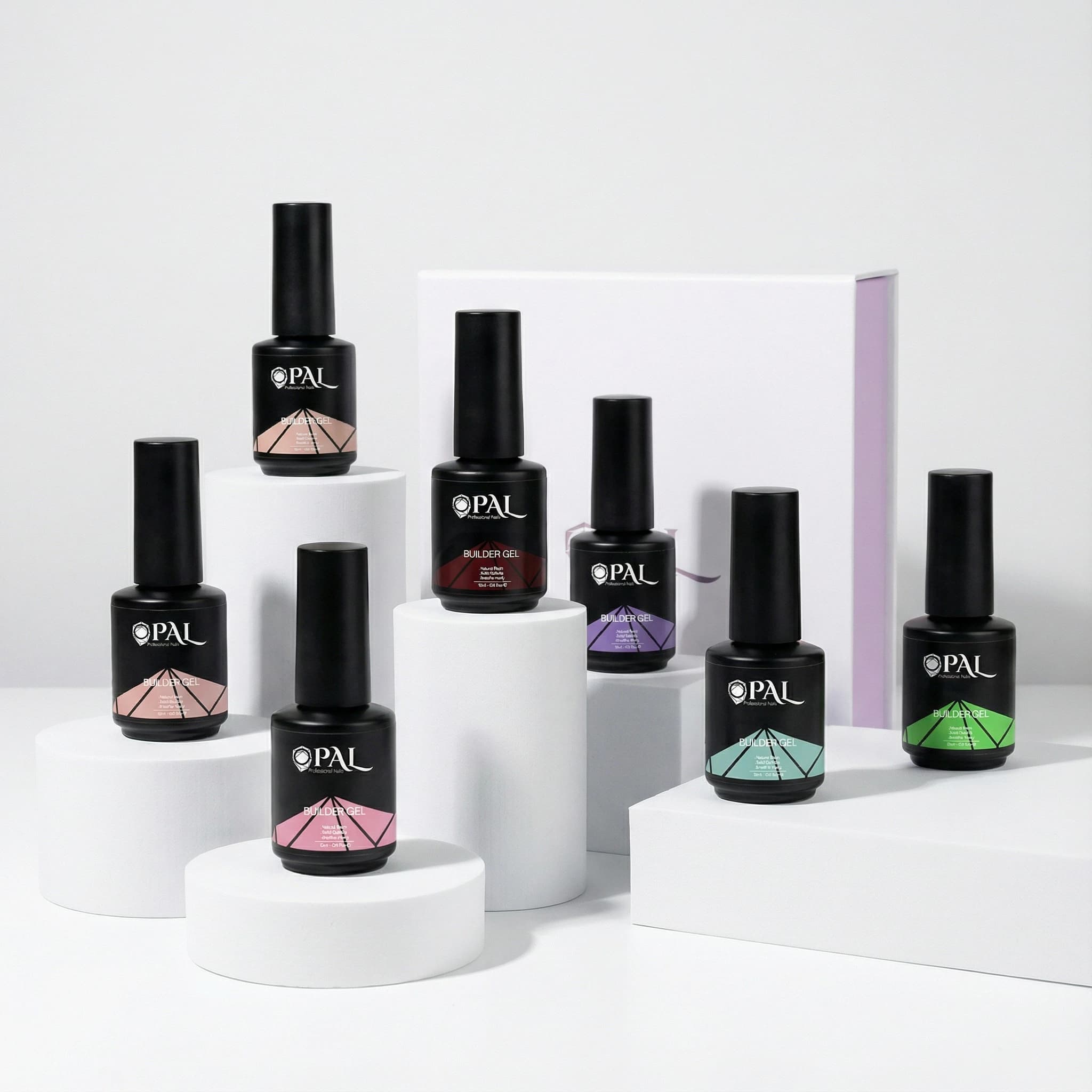
OPAL’s BIAB range is formulated for professional salon use, but the pricing is structured to be accessible for home users too. You’re getting the same product that working nail techs use on paying clients — not a dumbed-down “consumer version” with a different (read: cheaper) formula.
Here’s why it works for the budget-conscious home user:
Domestic shipping. OPAL ships from within Australia with free express delivery on qualifying orders. No international shipping costs, no customs surprises, no two-week wait wondering if your parcel is stuck somewhere between Heathrow and Sydney.
Full system availability. You can build your entire BIAB kit from one place — builder gel, base and top coats, prep tools and accessories, and gel polish colours if you want to add colour over your overlay. One order, one shipment, everything designed to work together. No compatibility guesswork.
Vegan and cruelty-free across the board. Not just the hero products — everything. If this matters to you (and it matters to a lot of people), you don’t have to check each individual item.
The formula is designed for self-levelling. This is a big deal for home users. Self-levelling builder gel settles into a smooth, even surface after you apply it, which means you need less filing to get a clean finish. Less filing means less risk of accidentally thinning your natural nail — which is exactly the kind of damage BIAB is supposed to prevent.
The products are also available as part of the broader OPAL system, so if you want to progress from BIAB overlays to builder gel in a pot or try poly gel extensions, you can expand without starting over with a completely new brand.
Browse the OPAL BIAB collection →
Ezmio Beauty — The Beginner-Friendly Aussie Option
Ezmio is an Australian brand that’s positioned itself squarely at the home-user market. Their builder gel range is designed with beginners in mind, and they do a good job of making the whole process feel less intimidating than it can with some of the more pro-focused brands.
Their formulas are 12-free (free from twelve common harsh chemicals), and the product pages include clear application instructions — which is genuinely helpful when you’re starting out and don’t have a nail tech friend to text at 9pm asking why your overlay looks lumpy.
Pricing is competitive. Shipping is domestic. The shade range in their builder gel line is growing, though it’s not as extensive as what you’d find from OPAL or TGB.
The trade-off is that Ezmio is primarily a consumer brand. If you start getting really good at BIAB and want to level up your technique or your product quality, you may eventually outgrow it and want something with a more professional-grade formula. But as a starting point? Solid.
Best for: Complete beginners who want a gentle, guided entry into BIAB at home.
Gelous — Affordable NZ Import
Gelous is a New Zealand brand that ships to Australia and offers builder gel products alongside their popular gel polish range. They’ve carved out a loyal home-user following by keeping things simple, accessible, and fairly priced.
Their kits are particularly popular with first-timers because they bundle everything together — builder gel, lamp, tools — so there’s no confusion about what you need to buy. The formula is 10-free, vegan, and cruelty-free.
The main consideration is that shipping from NZ adds a few extra days compared to an Australian-based supplier, and the total with shipping can nudge the price up closer to domestic options. The builder gel consistency is also a little thinner than some professional formulas, which makes it easier to apply but slightly less structural — fine for overlays, but you may find it lacking if you want to build significant length or a pronounced apex.
Best for: Home users who want an affordable all-in-one kit without having to piece things together.
Gella (Diamond Nail Supplies) — Bulk-Friendly Value
If you’re past the beginner stage and you know you’re going to stick with BIAB long-term, buying through Diamond Nail Supplies can offer good value — especially if you’re willing to order larger quantities.
Their Gella builder gel range covers bottles and pots, with a decent shade selection and professional-grade formulas. Diamond’s pricing is competitive across the board, and they offer free shipping on orders over $150 — so the economics work well if you’re stocking up on multiple products at once.
Where Gella doesn’t quite match the premium brands is in the self-levelling consistency (some users report needing a bit more manual work to get a smooth finish) and the shade range, which is still building. But for the price, it’s genuine professional-quality product — not repackaged consumer-grade gel.
Best for: Intermediate home users who want professional product at a lower price point and are happy to buy in slightly larger quantities.
The GelBottle Inc — Premium, But Worth Knowing About
TGB is the gold standard in the BIAB space. I’m including them here not because they’re “affordable” in the traditional sense — they’re at the premium end — but because they’re the brand most people encounter first when they start researching BIAB, and you should understand the cost picture.
A single bottle of TGB BIAB runs around $25 to $35 AUD depending on the shade and size, plus you’re paying international shipping from the UK (typically $15 to $30 depending on order size and speed). A basic starter setup from TGB could set you back $150 to $200 before you’ve added a lamp or any tools.
That’s not unreasonable for an excellent product — but when comparable professional-grade builder gels are available domestically for less (including shipping), it’s worth knowing that TGB isn’t the only option. Plenty of home users have started with TGB because of the social media hype and then switched to Australian brands once they realised they could get equivalent results without the shipping premium.
Best for: People who specifically want the original TGB formula and are willing to pay the premium for it.
What You Actually Need to Get Started (and What You Don’t)
One of the sneaky costs of doing BIAB at home is buying things you don’t actually need. Here’s an honest breakdown.
You definitely need:
The BIAB gel itself. Start with one shade — a clear or a nude that works with your skin tone. Don’t buy six colours on your first order. You need to learn the application technique first, and it’s much easier to do that with one product you’re getting familiar with.
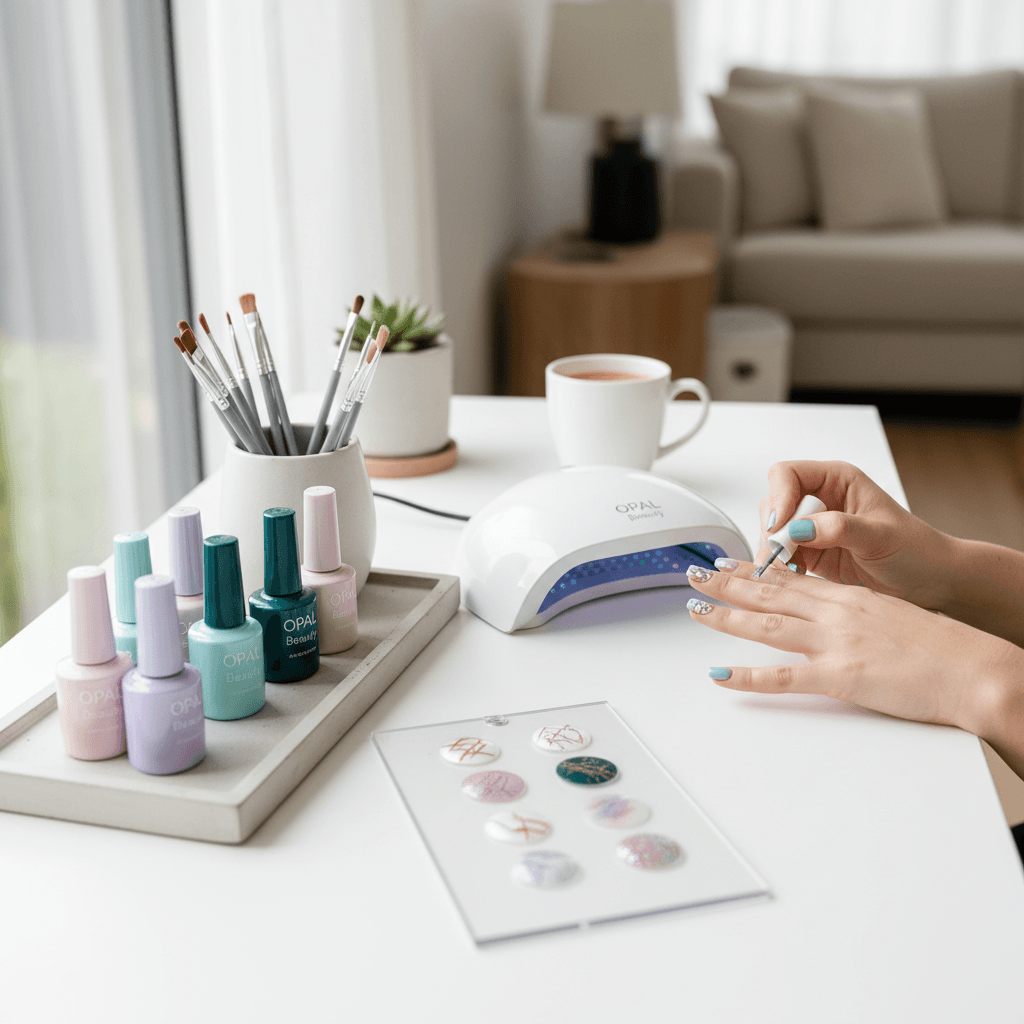
A UV/LED lamp. 48 watts, dual UV/LED compatible. You don’t need to spend $150 on a lamp — decent ones are available from $40 to $70. Just make sure it’s the right wattage and has a timer function. If you already own a gel polish lamp, it’ll probably work for BIAB too.
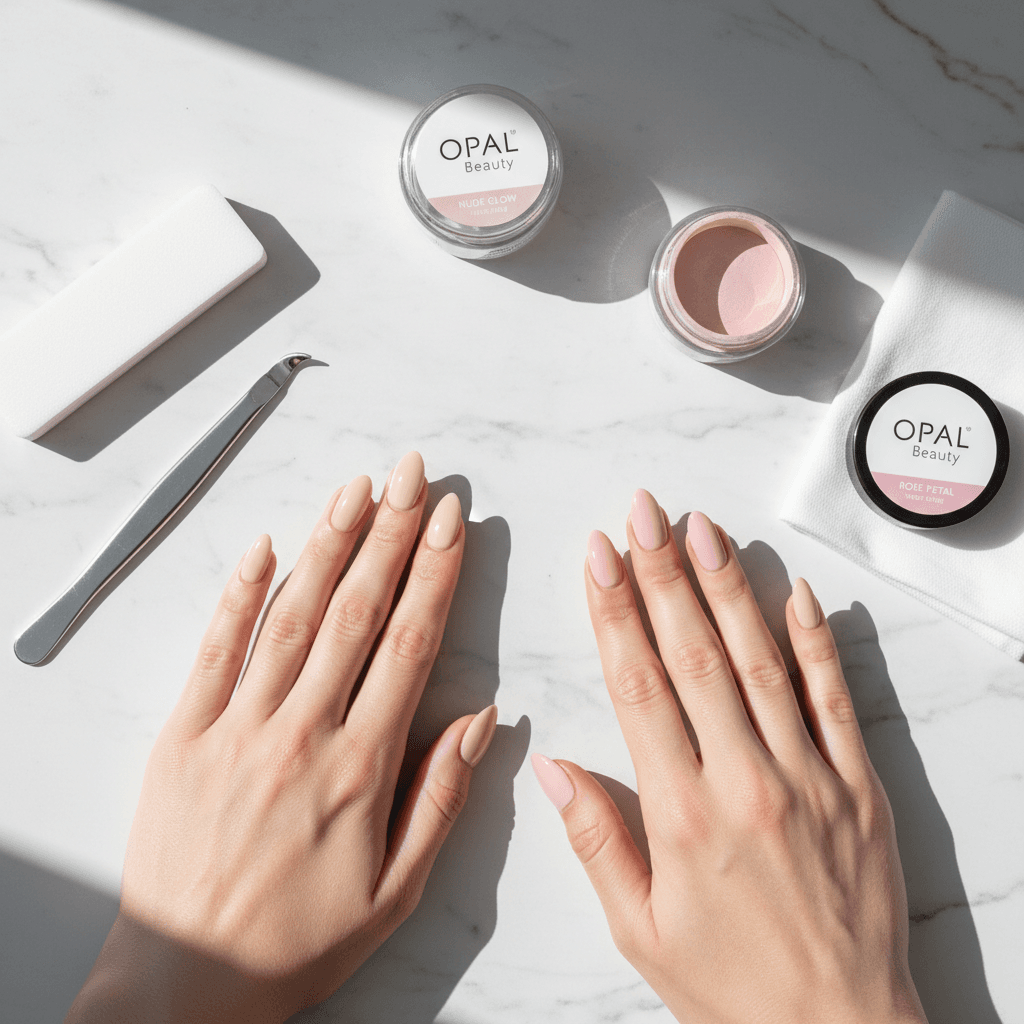
A nail file (180 grit) and a buffer (220 grit). For shaping and surface prep. These cost next to nothing and last for ages.
A cuticle pusher. Metal, rubber, or orangewood — doesn’t matter. You just need to push those cuticles back cleanly before application.
Lint-free wipes and isopropyl alcohol. For nail cleansing after prep. A bottle of isopropyl and a pack of lint-free pads will run you about $10 to $15 total and last months.
A gel top coat. BIAB on its own has a matte or tacky finish after curing. You need a top coat for the glossy, sealed surface. A no-wipe top coat is the easiest option for home use.
Acetone and foil wraps for removal. Pure acetone, lint-free pads, and aluminium foil. Total cost: about $10.
You probably don’t need (yet):
A nail dehydrator and primer. These improve adhesion and are standard in salon settings, but for home use you can get solid results without them initially — especially if your nails aren’t particularly oily. Add them to your kit later if you find your BIAB lifting early.
A separate base coat. Many BIAB formulas are designed to be applied directly to the prepped natural nail without a separate base coat. Check the instructions for your specific product before buying a base coat you might not need.
An electric nail file (e-file). These are lovely to have and they speed up refining and removal, but they’re absolutely not necessary for home BIAB. A hand file does the job perfectly well, and an e-file in inexperienced hands can thin the nail faster than you’d expect.
Multiple BIAB shades. Again — start with one. Get your technique right. Then build your shade collection based on what you actually want to wear, not what looked pretty on someone else’s Instagram grid.
Browse OPAL’s professional nail accessories →
Tips for Getting the Best Value Long-Term
Once you’re set up, the ongoing costs of home BIAB are genuinely minimal. Here are a few ways to stretch your product and your budget even further.
Apply thin layers. Every tutorial says this and there’s a reason — thin layers cure more evenly, last longer, and use less product per application. Two thin coats of builder gel will give you better results and better value than one thick coat.
Don’t let product pool around the cuticles. Product that touches the skin won’t cure properly and will lift within days. Clean up your cuticle margins before curing each layer. A small brush dipped in alcohol makes this easy. Getting this right means fewer redo nails, which means less wasted product and time.
Store your products properly. Keep your builder gel away from direct sunlight and heat. UV exposure can start curing the product in the bottle, making it thick and unusable. A drawer or cupboard is perfect. This sounds basic but I’ve heard from plenty of people who’ve left their gel bottles on a windowsill and then wondered why the consistency went strange after a month.
Learn to infill instead of fully removing. This is the single biggest cost-saver for long-term BIAB use. Instead of soaking off and reapplying every three to four weeks, you can file down the grown-out area at the base of the nail and apply fresh product just to that section. It uses a fraction of the product, takes less time, and is gentler on your natural nails. It takes a bit of practice, but once you’ve got it down, one bottle of BIAB lasts significantly longer.
Buy from suppliers with free shipping thresholds. If you know you’ll need gel polish colours, top coat, or new tools in the next few weeks, combine orders to hit the free shipping threshold rather than placing multiple smaller orders. OPAL offers free express delivery on qualifying orders — a small thing that adds up over time.
The Nail Prep Factor — Don’t Skip This
I keep coming back to this across every blog post we write because it really is that important: your nail prep determines at least 50% of how your BIAB turns out.
You can buy the best builder gel on the market and it’ll still lift within a week if your nails aren’t prepped properly. Oil, moisture, loose cuticle tissue, surface shine — any of these will compromise the bond between the product and your nail plate.
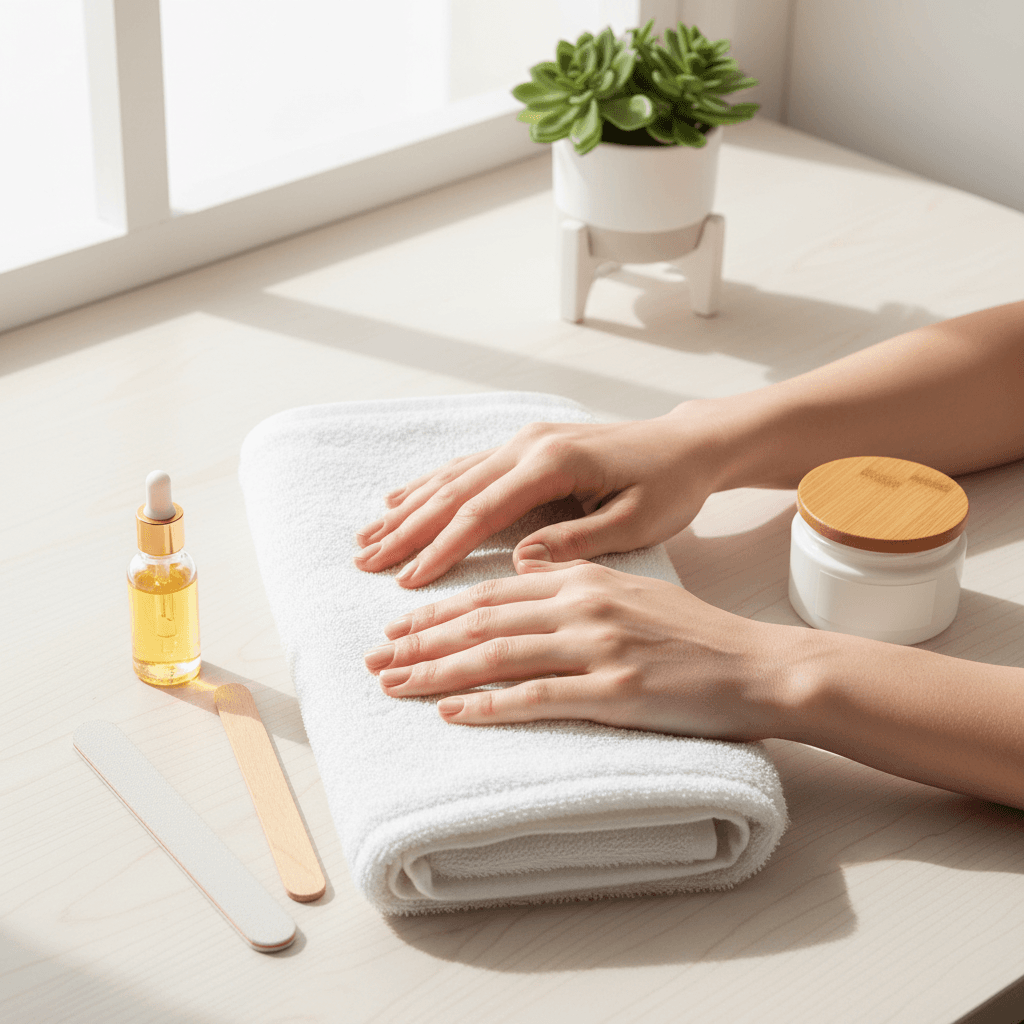
The good news is that proper prep doesn’t cost much. A file, a buffer, a cuticle pusher, lint-free wipes, and some isopropyl alcohol — that’s your entire prep kit, and none of it is expensive.
We’ve written a full step-by-step nail prep guide that walks you through exactly what to do before applying BIAB or gel polish. If you only read one other thing before attempting BIAB at home, make it that.
And when it’s time to take your BIAB off, our safe gel removal guide will make sure you don’t undo all the nail-strengthening benefits by peeling the product off. Please don’t peel it off. Your nails are begging you.
A Word on Colour Over BIAB
One of the best things about BIAB as a base layer is that it turns every gel polish application into a better experience. The overlay smooths out any ridges or imperfections on the natural nail, creating a perfectly even surface. Gel polish applied over BIAB looks smoother, lasts longer, and grows out more gracefully than gel polish on bare nails.
So while your BIAB itself might be a clear or nude shade, you’re not locked into that look. Layer gel polish colour over the top and you get the best of both worlds — structural strength underneath, beautiful colour on top.
If you’re building a home colour collection, start with the shades you know you’ll wear most. The OPAL best sellers page shows you which colours other people are actually buying (not just liking on social media — buying), which is a useful starting point. And the new arrivals section is worth checking if you like to be ahead of the curve.
So — What Should You Actually Buy?
If I had to put together a starter kit for someone doing BIAB at home for the first time in Australia, on a budget, without compromising on quality, here’s what I’d suggest:
One bottle of OPAL BIAB in clear or your closest nude shade. A 48W UV/LED lamp (if you don’t already have one). A top coat from the OPAL gel polish range. Basic prep tools — 180-grit file, 220-grit buffer, cuticle pusher — from the accessories collection. Lint-free wipes and isopropyl alcohol from your local chemist. Pure acetone and aluminium foil for removal.
Total starting cost: roughly $120 to $180 depending on whether you need a lamp.
That setup will give you salon-quality BIAB overlays at home for months. Compare that to three salon appointments. The maths speaks for itself.